Northeast · US

Infectious Disease Disinfection Planning in New Canaan, CT

Planning infectious disease disinfection in New Canaan, CT

New Canaan estate disinfection planning. Clean first, then disinfect, match EPA labels, know List N's limits, keep surfaces wet, and lower risk honestly. This is planning guidance, not a claim of a local office or crew in New Canaan.

Get an email reply about infectious disease disinfection

Send a short message to the follow-up inbox. A coordinator can reply by email. This form does not send emergency help; call 911 first if anyone is in danger.

Tell us what you need help with. Share a short description; please leave out medical details, access codes, and other sensitive information.

A request does not confirm a booking. For immediate danger, contact local emergency services.

Or email info@prompartybuses.com

Direct answer

The short answer for New Canaan, CT

Fairfield County estates on private lanes, with staff cottages and barn-side mudrooms, need a plan that cleans off grime before any product goes on. Match each EPA label to the germ of concern. Keep List N inside its COVID-19 limits. Make no sterile promises and no medical diagnoses.

Editorial guide · Biohazard Remediation NetworkUpdated 2026-07-22Location focus: New Canaan, CT

Local planning context

Large-lot New Canaan properties on private lanes often spread family, guest, and staff life across several buildings. There's a main house and a caretaker cottage, and sometimes a barn or pool pavilion with its own sinks and boot benches. When illness spreads in the household, germs usually travel through the service areas. Laundry chutes, pantry doors, garage remotes, and the lane-gate keypad matter more than formal parlors nobody uses. Your plan should list which buildings people actually used while someone was contagious. It should also track which soft items left those rooms. Don't assume one fog pass covers the whole estate.

In Fairfield County winters, houses stay shut for long stretches. Chemical smells and wet film dry differently than on a breezy summer afternoon. Honor the label's wet time even when school carpools and Metro-North bags want the mudroom back early. Connecticut Department of Public Health and New Canaan Health Department materials can support factual notices. A lane estate is no clinic. A private-lane estate is still a home, even with a visiting nurse. Don't describe its cleanup as if it were a licensed health care infection-prevention program.

Horse and landscaping vendors often come in through side doors, not the formal front entrance. Hose bibs, tack-room light switches, and delivery benches near the kitchen wing all see their hands. Add those spots to the high-touch map if staff or riders moved between the barn and house during the illness.
Property considerations

Map lane-gate keypads, staff pantry handles, laundry controls, and barn boot benches before decorative parlor surfaces.

Write separate lines for the main house, caretaker cottage, and pool pavilion. An untreated outbuilding isn't cleared just because it's nearby.

Find the fabric items, like drapes, padded headboards, and horse blankets stored indoors, that need washing or setting aside instead of hard-surface claims.

Main-house and cottage kitchen counters may need a water rinse after disinfecting, which barn surfaces do not.

Plan winter airing-out and return times so no one is rushed into wet product to make a school-morning departure.

Record the side-door paths landscapers and riding staff used while someone was contagious.

Response-planning framework

Name the illness before choosing products for each building

Write down what the person asking knows. Did a doctor name a germ? Is it vomiting or diarrhea? Or just a cold passed around the cottage? Don't diagnose family members. For the house, cottage, and barn alike, choose products by EPA registration and the germs printed on the label. Spore germs? Then the label must say so.

Clean grime first along every service path

Before any disinfectant goes on, wash the surfaces people touched in each building. That means pantry counters in the main house, the cottage bathroom, and the tack-room sink. Hay dust, mud, and kitchen grease all keep a product from reaching the surface. Once each area is clean, apply the labeled product and let it stay wet for the full time. Fogging machines don't replace this step, and they don't make a multi-building estate sterile.

Stage empty periods around lane access and staff returns

Keep family, staff, and riders out of each treated building until the product has stayed wet for its full time. Coordinate caretakers, vendors, and gate access so side doors stay controlled during that time. Don't name anyone who was sick.

File proof of the process, not sterile-estate letters

The estate file can hold product names, EPA numbers, the buildings and rooms treated, the wet times kept, and photos of the setup. If someone swabs a few estate touch points for organic residue, treat the results as a grime check only. They don't show which germs were killed. Point community questions to the New Canaan Health Department or Connecticut DPH.

Documentation checklist

  1. 1Written germ concern and list of buildings (main house, cottage, pavilion). Don't label a lane estate as health care space
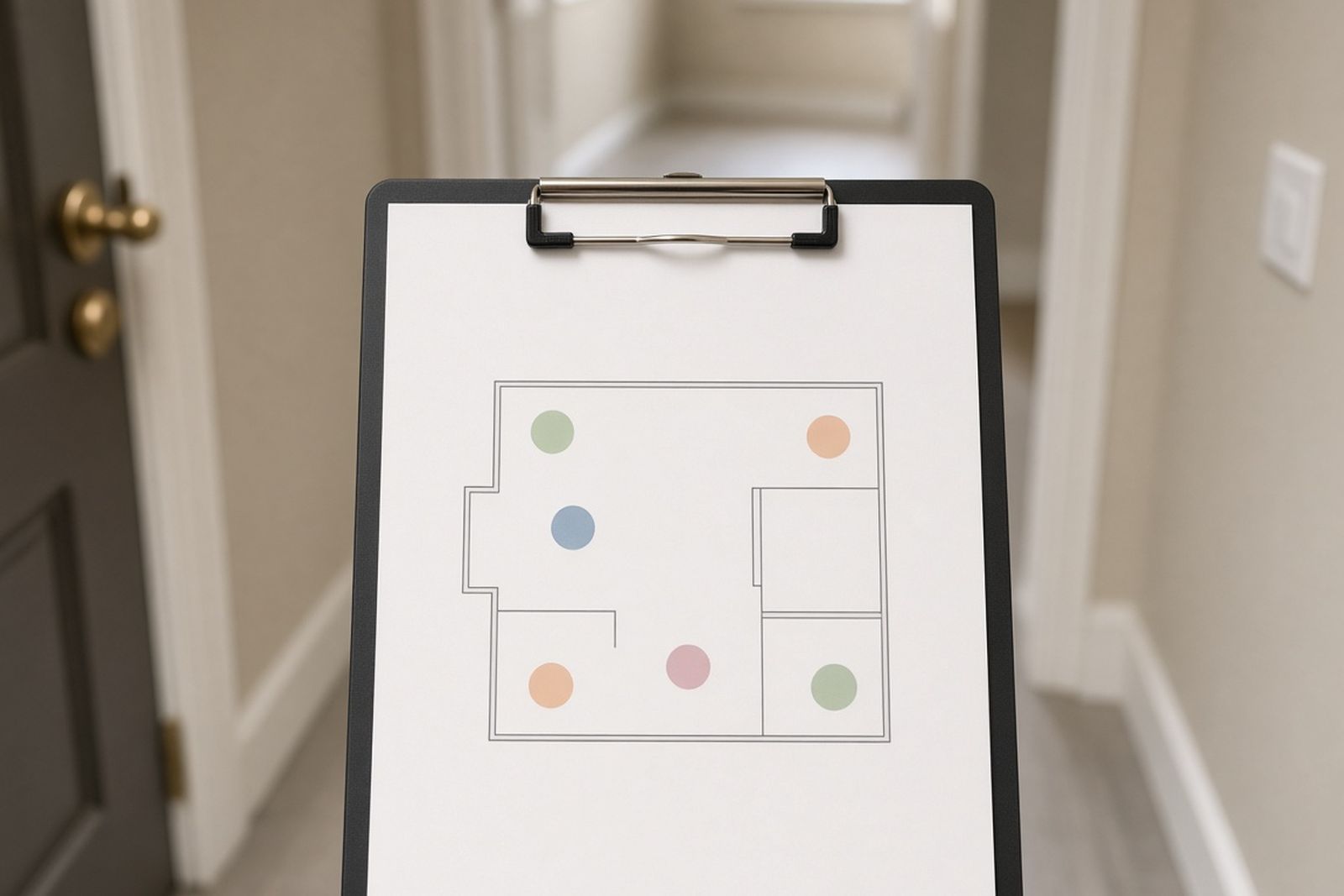
  2. 2Sketch of each building marking touched hardware and the soft furnishings left out
  3. 3Label copies and EPA registration numbers for each product used in the main house, cottage, and barn, with the germs listed and contact times
  4. 4Detergent cleaning steps recorded for pantry, laundry, and tack-room surfaces before any disinfectant
  5. 5Times when each building's surfaces were wet, checked against the label
  6. 6Winter fresh-air plan and written return times for each building, taken from the label and SDS
  7. 7Notes on how soiled bedding, barn rags, or other soiled waste left the property
  8. 8Record of what the house manager told riders, grooms, and vendors

Official resources

Questions for this location

After one visit from a cleaning crew, can anyone call a New Canaan estate germ-free?

No. List N is EPA's list of products for use against the COVID-19 virus when label directions are followed, and nothing more. A Fairfield County house with a barn and cottage still needs good basic work. Scrub first. Use the right label. Stay wet the full time. Even then, it only lowers risk on the hard surfaces treated. It does nothing for the air, the upholstery, or the people.

If illness stayed in a caretaker cottage, must the main house and barn get the same treatment?

Not automatically. Base the plan on where people, laundry, and shared kitchens moved while someone was contagious. Shared laundry rooms, pantry doors, and gate hardware may need cleaning and labeled disinfection even if the formal living room went unused. Treating the caretaker cottage doesn't make the main house's formal rooms sterile, and no report should say so. List what's included and left out, building by building. Pick a product labeled for the germ the family is worried about. Don't assume a List N bottle handles everything.

How should estate managers describe outbreak-related work without stigmatizing residents or staff?

Tell grooms, household staff, and vendors only what they need. Say which buildings are closed, for how long, and where to go instead. Leave out who was sick, the diagnosis, and any upsetting details. If someone has health questions, suggest they call their doctor or the New Canaan Health Department. Keep invoices, product labels, and wet-time logs in the estate office. Don't attach them to notices that many people will read.

What verification is realistic after disinfection of high-touch surfaces on a private-lane estate?

A useful packet for a private-lane estate lists each building and the product names and EPA numbers. It shows what was cleaned before disinfecting and how long surfaces stayed wet. It adds photos of the prep and the written reopening times. A residue swab on a pantry door or tack-room switch can show whether grime was removed. A low number doesn't identify germs or prove the estate is sterile. Don't accept paperwork promising that the house, cottage, or barn will stay germ-free.

What if a riding accident or kitchen cut left blood on the property?

Blood from a fall in the barn or a slip of a kitchen knife brings OSHA bloodborne pathogen rules into play for anyone cleaning it. Put the barn or kitchen mess in writing first. When blood or similar material is present, write gloves and other gear, sealed waste bags, and exposure-control steps into the estate plan. When it's absent, clean, then use a labeled disinfectant, and describe the work in plain terms without hospital language. The CDC's hospital sterilization guidance doesn't set a clearance standard for a New Canaan home or barn.

How should a New Canaan family clean horse-barn areas after a rider was sick?

Focus on what the sick rider touched in the barn. That includes the tack-room door handle, light switches, grooming box handles, the hose bib, and the sink. Brush off dust and hay first. Then clean with detergent and disinfect with a product labeled for those surfaces and safe around animals. Keep horses out of any area where product is still wet. Wash saddle pads and gloves separately. The stalls themselves rarely need disinfecting for a human illness.

What should a New Canaan household tell a visiting caterer after a guest was sick at a party?

Tell the caterer that a guest got sick and that you've cleaned the kitchen and serving areas. Don't name the guest or describe symptoms. Ask whether the caterer's staff will need to clean equipment they brought. Throw out any leftover party food that was served or handled. If several guests got sick afterward, you may want to call the local health department. It can help decide whether food was a likely cause.

Contact

Get help by email

Send a short message for an email reply about infectious disease disinfection planning questions for the New York City area.

Clipboard showing a room plan with color-coded dots marking high-touch surfaces
Illustrative photo, not a job record. Clipboard showing a room plan with color-coded dots marking high-touch surfaces.
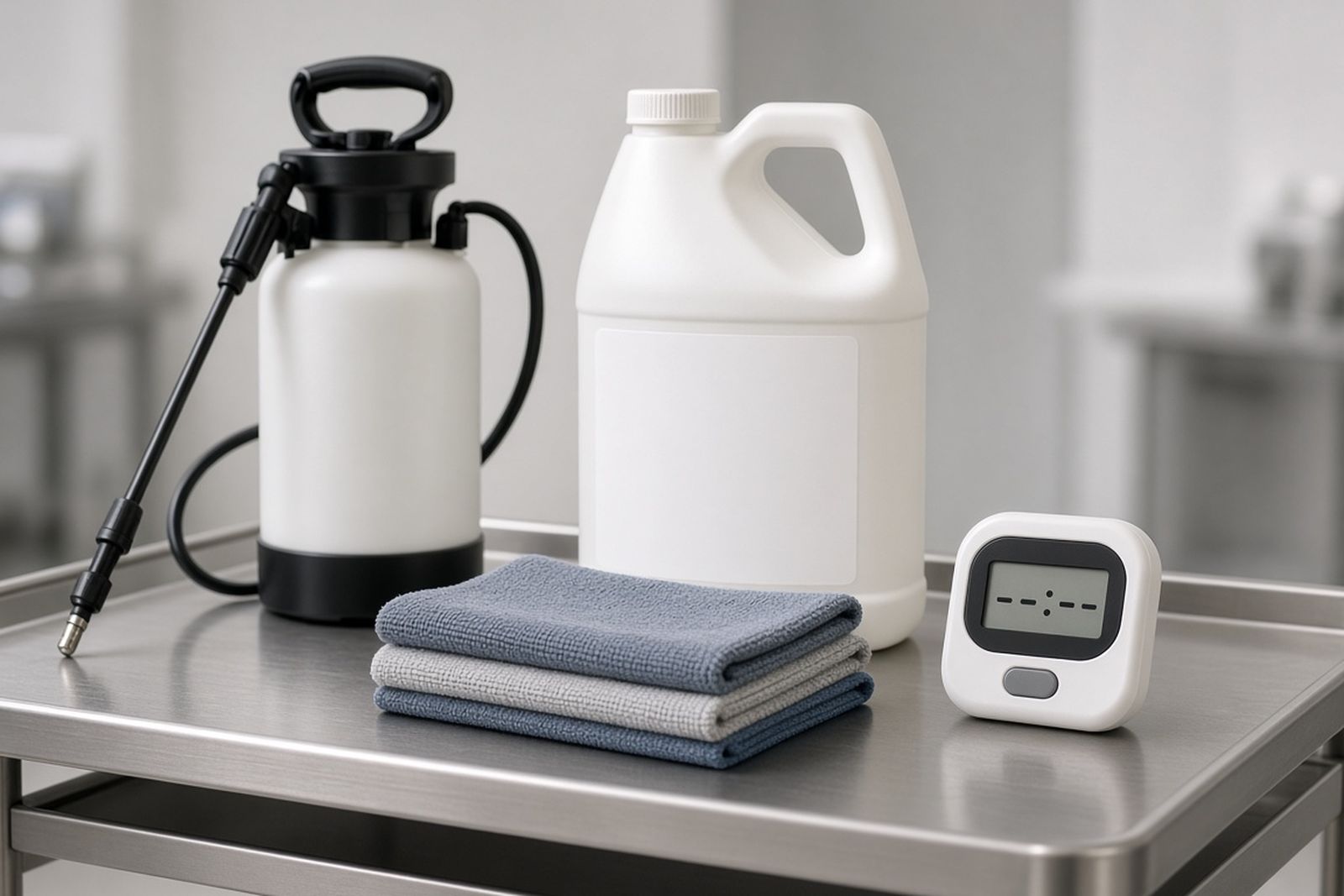
Pump sprayer, disinfectant jug, folded cloths and a contact-time timer on a steel cart
Illustrative photo, not a job record. Pump sprayer, disinfectant jug, folded cloths and a contact-time timer on a steel cart.

Infectious Disease Disinfection figures to keep in mind

National and research figures, not New Canaan data. Local conditions, rules and providers vary; use these for scale and context only.

8

Products above pH 8 accounted for 74% of failures in the experiment.

Read with care: Accelerated test conditions; not a failure rate for installed equipment.

Source: Jennings et al. (2024)Eight wipe formulations tested on healthcare plastics under fixed strain for seven days.

98.1%

Manual wiping met the study's disinfection-success criterion on 98.1% of surfaces versus 75.5% for UV-C.

Read with care: Specific device, protocol and success criterion; no patient infection endpoint.

Source: Knobling et al. (2023)Naturally contaminated surfaces in a comparative field test.

81%

81% reported bleach use on high-touch surfaces in contact-isolation rooms.

Read with care: 47 of 273 contacted participated; practices were reported rather than observed.

Source: Han et al. (2021)47 US hospital environmental-services respondents across 26 states; 2019 survey.

These figures are public research and agency data, not this network's own job records. Keep each number with its population, year and limits; none of them predicts cost, timing or outcome at a specific property.

Plan before you reach out

Use the first 24 hours planner for immediate steps and the provider vetting checklist to confirm any New Canaan provider's training, insurance and waste path in writing.

What research has found

Findings from published studies of people and properties in situations like this one. They describe what researchers observed in a specific group; they are not predictions for your case.

All tested formulations contained agents capable of environmental stress cracking.
Who was studied: Eight wipe formulations tested on healthcare plastics under fixed strain for seven days.Limits: Accelerated test conditions; not a failure rate for installed equipment.Chemical resistance testing of plastics: compatibility of detergent and disinfectant pro… (2024)
Both methods reduced cultured bacterial contamination.
Who was studied: Naturally contaminated surfaces in a comparative field test.Limits: Specific device, protocol and success criterion; no patient infection endpoint.Superiority of manual disinfection using pre-soaked wipes over automatic UV-C without pr… (2023)

Infectious Disease Disinfection community polls

Poll results

Every count is a real visitor vote; nothing is seeded or padded. One vote per poll per device, and you can change your answer.

Your experience

When your facility had an illness cluster, how did you handle cleaning?

No visitor votes yet
Process

How did you decide whether to close all or part of the facility?

No visitor votes yet

Planning cleanup in New Canaan?

Send a short message about the property to the follow-up inbox. A coordinator can reply by email with next steps.

Your request is sent to the follow-up inbox. A coordinator can reply by email.

If anyone is hurt or in danger, call 911 first.