Northeast · US

Infectious Disease Disinfection Planning in Newton, MA

Planning infectious disease disinfection in Newton, MA

Newton village disinfection planning. Covers shared porches, EPA label claims, List N limits, how long surfaces stay wet, and honest home risk cuts. This is planning guidance, not a claim of a local office or crew in Newton.

Get an email reply about infectious disease disinfection

Send a short message to the follow-up inbox. A coordinator can reply by email. This form does not send emergency help; call 911 first if anyone is in danger.

Tell us what you need help with. Share a short description; please leave out medical details, access codes, and other sensitive information.

A request does not confirm a booking. For immediate danger, contact local emergency services.

Or email info@prompartybuses.com

Direct answer

The short answer for Newton, MA

Newton's thirteen villages hold duplexes, two-families near Crystal Lake, and walk-ups along the Green Line. They need porch-and-stair plans that handle shared rails honestly. Keep List N inside its COVID-19 limits. No duplex turns sterile from one wipe.

Editorial guide · Biohazard Remediation NetworkUpdated 2026-07-22Location focus: Newton, MA

Local planning context

Newton's village centers pack in more shared touch points than acreage towns. Think shared porch rails, duplex vestibule buzzers, basement laundry pull-chains, and stacked fridge handles. In a two-family house, it matters which household used which bath and laundry while someone was sick. That counts for more than treating a front room nobody entered.

Mornings timed to the Green Line and buses squeeze reopening decisions. Households often wipe surfaces dry early so someone can catch a train or bus. That cuts the label's contact time short. Nor'easter storm windows and radiator heat both change how smells clear after products go on. A routine winter wipe of porch rails and buzzers is not sterilization.

Village shop blocks sometimes share alleys with apartments. If blood shows up in a duplex hallway or shared alley, workers need an OSHA bloodborne pathogen plan.

Property considerations

Do shared porch rails, vestibule buzzers, and laundry pull-chains before parlor decor.

Wash duplex futon covers and stuffed animals first, then move on to hard surfaces.

On weekday mornings, have both households use a bath that was not just treated.

Each unit's kitchen counters may need a rinse after disinfecting.

Schedule the work after the morning commute so no one hurries a wet surface dry.

Keep shop-suite device rules out of notices about reopening the residential stairs.

Response-planning framework

Chart how each household used the porch and baths

Note which baths, kitchens, and laundry machines each household used while someone was sick. Don't write down diagnoses. Pick EPA-registered products labeled for the illness in question. List N concerns COVID-19. Norovirus and spore-forming germs may call for a product with another label claim. Refuse sterile-home slogans.

Clean grime off shared village fixtures first

CDC community guidance puts detergent cleaning ahead of disinfecting duplex baths and porch rails. In a bath two households share, soap scum and grime will block the product if nobody scrubs first. Keep fridge handles, taps, and buzzers wet for the label's full contact time. Write down when the wet time started and ended, so a clean smell isn't taken as proof the job is done.

Hold the reopening time on transit mornings

Sending one household to the other unit's bath only helps if that bath was treated too. Open a storm window as the SDS allows.

A landlord file for city questions

Keep EPA numbers, label claims, a map of both units, cleaning notes, and wet-time logs with the duplex records. A residue swab on a shared fridge handle shows leftover grime and nothing about specific germs. Send public questions to City of Newton Health and Human Services or the Massachusetts Department of Public Health. Medical decisions stay with doctors.

Documentation checklist

  1. 1List of duplex contact spots, from the porch to the laundry
  2. 2Illness pattern as the household or duplex owner described it, with no names
  3. 3EPA registration numbers and germ claims
  4. 4Proof of detergent cleaning first
  5. 5Wet-time clock for the two-family's shared bath
  6. 6When each household could use its rooms again
  7. 7Which cushions, bedding, and toys were washed or put away
  8. 8Notes on whether nearby shop or mixed-use spaces were included

Official resources

Questions for this location

What comes first in a village duplex after a stomach bug?

Wash visible mess off the duplex bath and shared fridge handles with detergent. Next, a registered gut-bug product goes on. Let it sit wet for its full time. Stuffed toys need washing or setting aside. Being on List N alone doesn't show a product works against norovirus. Check the label. Both households should keep up handwashing. The cleanup lowers risk, but it doesn't sterilize.
A tutor comes to our Newton home. Can lessons continue the afternoon we clean?

The lesson table is ready once it was scrubbed, treated, and left alone until the label's clock ran out. Wiping the table while a student sits there doesn't work. Move the lesson to another room or push it back a few hours. Note the product and times. Tell the tutor the room was cleaned, not sterilized, and let them decide if they're comfortable.

What should neighbors hear while waiting for a transit-timed reopen?

Don't share diagnoses. Explain that treating the porch rails and laundry lowers risk on those objects. It can't keep anyone from getting sick later. Point wider questions to City of Newton Health and Human Services. Leave the SDS where the upstairs or downstairs neighbor can read it before going back in.

Is a List N wipe enough after someone in our Newton household had COVID-19?

EPA's List N points to COVID-19 products. That's useful in a village-center kitchen, but limited. Confirm the EPA number. Follow the label's contact time and its directions for older painted woodwork. List N says nothing about the stomach bugs that go around Newton schools each winter. Pair the product with detergent cleaning, an empty kitchen during the wet time, and open windows when the weather allows. Isolation calls belong to doctors.

When does a Newton duplex cleanup need bloodborne pathogens planning instead of a routine wipe-down?

Could a crew touch blood, or other body fluids that can carry disease, in the shared hall? Then OSHA's blood plan applies. Describe the mess first. Blood present? The two-family plan then lists gloves, sealed bags, and exposure steps. If not, clean, then disinfect with honest label claims. Avoid hospital terms in anything you share with the other household.

How should Newton neighbors share a porch and entry during one household's illness?

Agree on a simple plan. Either the healthy household wipes the front door handle, porch rail, and mailbox once a day, or the sick household does it on the way in and out. Use a disinfectant labeled for painted wood and metal. Leave a small bottle of hand sanitizer by the door. Keep talk about the illness private and practical. Once everyone is well, do one thorough clean of the entry and shared basement together.

What should a Newton family know about disinfecting old painted woodwork?

Many older homes have painted trim, railings, and doors that strong disinfectants can damage. Some old paint may contain lead. Don't scrub or sand painted surfaces hard enough to make dust or chips. Use a gentle cleaner first. Then use a disinfectant whose label allows painted surfaces, and test it on a hidden spot. If paint is already peeling, clean around it carefully and ask the city health office about lead safety.

Contact

Get help by email

Send a short message for an email reply about infectious disease disinfection planning questions for the Boston area.

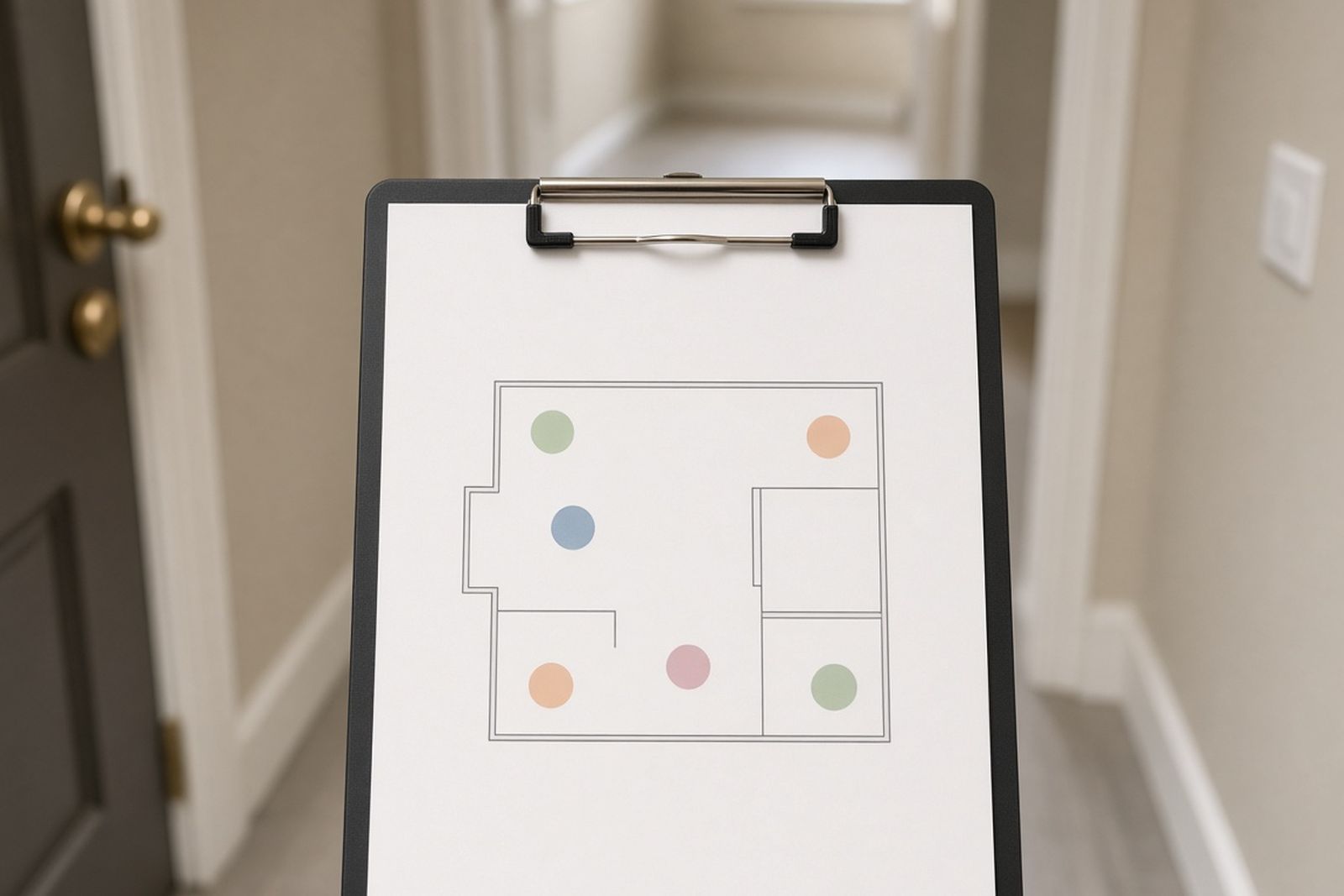
Clipboard showing a room plan with color-coded dots marking high-touch surfaces
Illustrative photo, not a job record. Clipboard showing a room plan with color-coded dots marking high-touch surfaces.
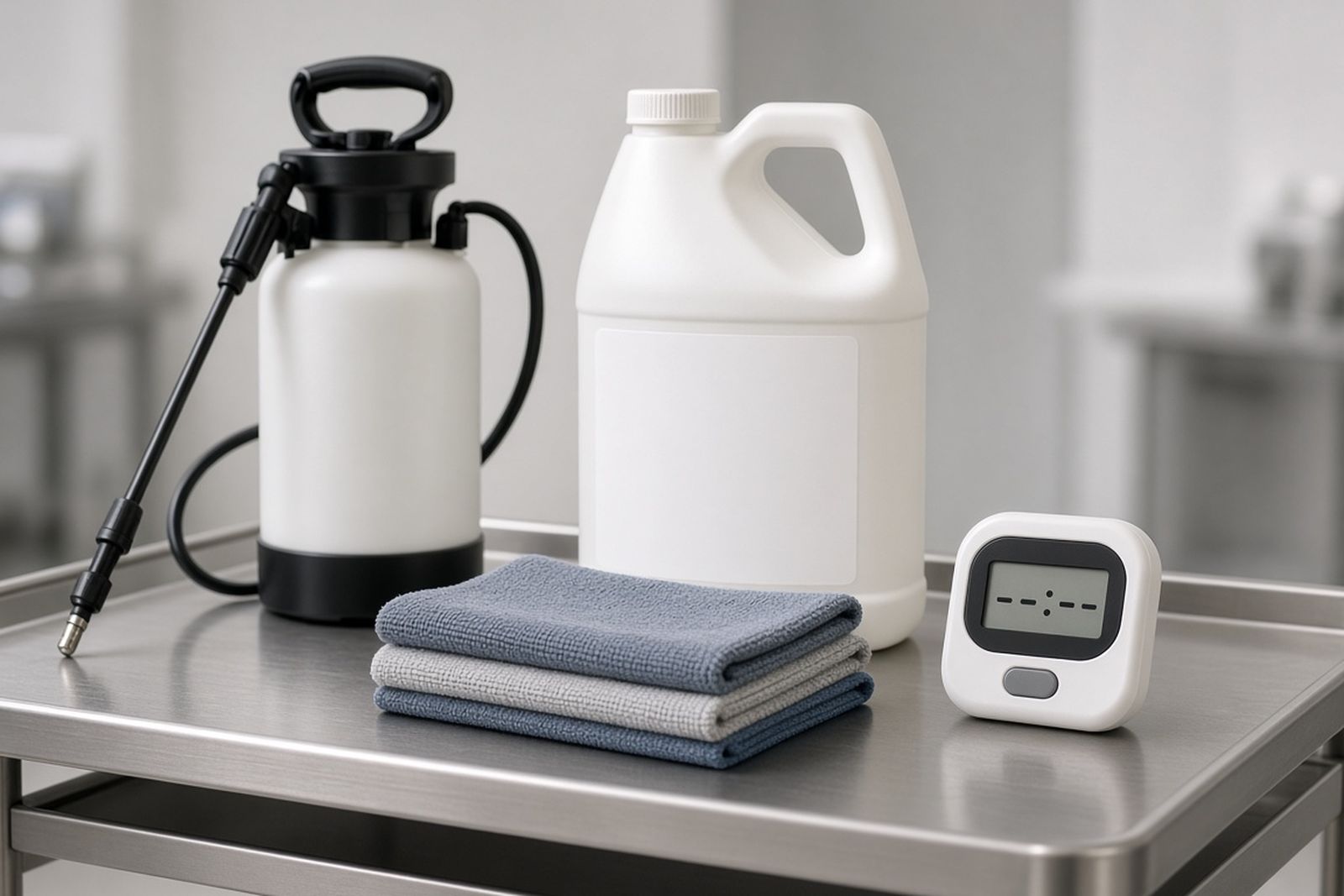
Pump sprayer, disinfectant jug, folded cloths and a contact-time timer on a steel cart
Illustrative photo, not a job record. Pump sprayer, disinfectant jug, folded cloths and a contact-time timer on a steel cart.

Infectious Disease Disinfection figures to keep in mind

National and research figures, not Newton data. Local conditions, rules and providers vary; use these for scale and context only.

500+

EPA's List N of disinfectants approved for use against SARS-CoV-2 grew from 85 products in March 2020 to more than 500 by October 2020.

Read with care: Product count has changed since 2020; List N inclusion is not an EPA endorsement.

Source: EPA (2020)United States, EPA-registered products, as of October 21, 2020

4,000+

Under FIFRA, a disinfectant must be registered with EPA before it can be sold or distributed in the U.S.; more than 4,000 antimicrobial products are currently registered.

Read with care: Registration means EPA reviewed efficacy and safety data for label claims, not that any product works on every pathogen.

Source: EPA (2025)United States, federal pesticide regulation

2,500

About 2,500 norovirus outbreaks are reported in the United States each year, and over half occur in long-term care facilities.

Read with care: Only reported outbreaks are counted; many outbreaks go unreported.

Source: CDC (2024)United States, annual reported outbreaks, all settings

These figures are public research and agency data, not this network's own job records. Keep each number with its population, year and limits; none of them predicts cost, timing or outcome at a specific property.

Plan before you reach out

Use the first 24 hours planner for immediate steps and the provider vetting checklist to confirm any Newton provider's training, insurance and waste path in writing.

What research has found

Findings from published studies of people and properties in situations like this one. They describe what researchers observed in a specific group; they are not predictions for your case.

Sporicidal products were common in contact-isolation rooms but uncommon in ordinary rooms.
Who was studied: 47 US hospital environmental-services respondents across 26 states; 2019 survey.Limits: 47 of 273 contacted participated; practices were reported rather than observed.Environmental cleaning and disinfection of hospital rooms: A nationwide survey (2021)
The most common reported disinfection frequency shifted from between patients to twice daily.
Who was studied: 137 healthcare-professional respondents; convenience/purposive online sample across the pandemic.Limits: Reported knowledge and practices, not observed compliance or infection outcomes.Infection prevention control in practice: a survey of healthcare professionals’ knowledg… (2024)

Infectious Disease Disinfection community polls

Poll results

Every count is a real visitor vote; nothing is seeded or padded. One vote per poll per device, and you can change your answer.

Your experience

When your facility had an illness cluster, how did you handle cleaning?

No visitor votes yet
Process

How did you decide whether to close all or part of the facility?

No visitor votes yet

Planning cleanup in Newton?

Send a short message about the property to the follow-up inbox. A coordinator can reply by email with next steps.

Your request is sent to the follow-up inbox. A coordinator can reply by email.

If anyone is hurt or in danger, call 911 first.