South · US

Infectious Disease Disinfection Planning in Palm Beach, FL

Planning infectious disease disinfection in Palm Beach, FL

Palm Beach barrier-island disinfection planning. Map dock gates, keep surfaces wet under shutters, know EPA List N limits, and clean before you disinfect. This is planning guidance, not a claim of a local office or crew in Palm Beach.

Get an email reply about infectious disease disinfection

Send a short message to the follow-up inbox. A coordinator can reply by email. This form does not send emergency help; call 911 first if anyone is in danger.

Tell us what you need help with. Share a short description; please leave out medical details, access codes, and other sensitive information.

A request does not confirm a booking. For immediate danger, contact local emergency services.

Or email info@prompartybuses.com

Direct answer

The short answer for Palm Beach, FL

Palm Beach barrier-island Colonials, Intracoastal dock gates, and Worth Avenue freight elevators need subtropical records. Protect the label's wet time under hurricane shutters. Keep List N inside its COVID-19 limits. Refuse sterile-estate badges after a citrus wipe of a lagoon-side powder room.

Editorial guide · Biohazard Remediation NetworkUpdated 2026-07-22Location focus: Palm Beach, FL

Local planning context

On island estates, germs move through the service hallways more than the ocean parlors. Dock-gate keypads get crusted with salt from Intracoastal spray. Staff pantry handles get used after beach trips. Powder-room taps and the freight elevators that haul luggage see hands before any guest touches a foyer rail. When guests come and go midweek, Worth Avenue freight bookings and Intracoastal dock fobs matter more than unused ocean parlors.

Afternoon storms and closed storm panels change how things dry. Damp island air slows drying, which helps. But smells trapped under shutters tempt staff to buff fixtures dry so dinner can go ahead. Cabana towels, terry robes, and outdoor cushions usually need washing or temporary removal. Hard-surface germ claims don't cover them.

The social season fills guest wings, then empties them midweek. Surface work is still community risk reduction under CDC cleaning guidance. Clean the grime first, then disinfect with a product matched to the germ. Device sterilization language belongs in clinical programs, not dock-house reopening notes. Keep diagnosis words out of staff briefings. Intracoastal bridge delays and island gatehouse logs often decide when freight elevators can be used. Write those logistics into the empty-period plan.

Property considerations

Start with dock-gate keypads, staff pantry handles, and freight-elevator call plates before parlor decor.

Dock and pool hardware carries sunscreen and salt, which must be scrubbed off before any disinfectant can work.

Keep guest baths and powder rooms empty through the full labeled wet time.

Staff pantry counters used for food may need a rinse afterward.

When storm panels are up, plan how treated rooms will be aired so staff return on SDS timing rather than before dinner service.

Send cabana towels and robes to the laundry before crews start on hard surfaces.

Flag generator-yard hose bibs if staff used them while someone was contagious.

Note the lagoon bulkhead handrails if people used that route coming back from the beach.

Response-planning framework

Sketch the Intracoastal service paths

Note whether guests describe vomiting or a cold or flu exposure. Don't use names. Pick EPA-registered bottles whose germ claims match that story. A List N listing for COVID-19 doesn't automatically cover a stomach virus in the guest wing. Ban sterile-estate slogans behind the Worth Avenue hedges.

Scrub off sunscreen and salt first

CDC community guidance wants sunscreen film and bath grime gone before any disinfectant. Missed crust on dock fobs keeps the product from working as labeled. Keep powder-room taps and freight-elevator plates wet for the printed time. Log the times, so a citrus scent never counts as proof the job is done.

The empty period while shutters are down

Keep treated guest wings empty until the wet time and the SDS return notes are done. One household schedule beats wiping fixtures dry for a dinner seating. A backup powder room helps only if it was part of the job. Open the shutters carefully afterward, without calling the air sterile.

A county binder for seasonal households

Store registration numbers, sketches of the service halls, salt-cleaning notes, and wet-time logs. A residue swab on a faucet only flags leftover grime. Give staff reopening hours and SDS locations, never fogger recipes.

Documentation checklist

  1. 1Sketch of dock-fob and staff-pantry traffic
  2. 2Note on the guest-wing exposure, without names
  3. 3EPA registration numbers and the germ claims used
  4. 4Proof that sunscreen and salt were removed
  5. 5Wet-period start and stop times for guest baths
  6. 6Household reopening schedule tied to shutter and dinner plans
  7. 7Decisions to wash or bag cabana towels and cushions
  8. 8Staff note keeping medical care separate from reopening facts
  9. 9Bridge and gatehouse logistics note for freight elevator timing

Official resources

Questions for this location

After a guest-wing stomach cluster on a barrier island, what should staff treat first?

Start with the guest bath used during the illness, the staff-pantry fridge pulls, and the Intracoastal dock fobs where luggage and coolers land. Scrub off sunscreen crust with detergent. The guest bath then gets a registered gut-germ product, left wet until its island timer ends. Cabana towels go to the laundry, not a spray pass. For a guest-wing stomach bug, List N is the wrong measuring stick unless the bottle's own label supports that use. Keep handwashing in the plan. Surface work only lowers risk on treated hard items.
If a powder room smelled like cleaner, are ocean parlors finished?

No. Trace the service halls, laundry, and staff pantries. Treat what hands hit there. Let it sit wet. A clean smell in a powder room doesn't sterilize unused parlors. Shared laundry needs its own line. Write down what's included and left out. List N is not a master key for every germ guests mention.

How should estate staff brief visiting nurses without asking for diagnoses?

Tell the nurse which rooms are closed and when the safety sheet says they can be entered. Say nothing about the guests' illness unless the family chooses to share it. Cleaning staff are not clinicians and shouldn't ask for or pass on diagnoses. Disinfecting lowers germs on surfaces. It doesn't protect anyone the way medical care does. If there was blood, trained workers should handle that part.

Why do closed storm panels cut wet times short before dinner seatings?

Humidity holds smells under the shutters, so someone wipes fixtures dry before dinner. That ends the disinfecting early. Keep the full wet time, even if the empty period runs long. Open the shutters carefully afterward. Porous cushions may need longer to dry. Record the schedule you used. Subtropical storms don't widen what List N covers.

What should a seasonal insurer file include after dock-and-guest-wing work?

The insurer file should list product names and registration numbers and the dock-house and guest-wing rooms treated. Show how sunscreen and salt were cleaned off first, along with wet times and what happened to cabana towels. Note how rooms were aired with the shutters closed, and the reopening times. Photos of the prep help. A residue swab only hints at leftover grime. Turn down any badge or certificate promising the estate is germ-free.

How should Palm Beach estate staff clean a guest's luggage cart or golf cart after an illness?

Wipe the cart's handles, steering wheel, seat edges, and any key or fob with detergent to remove sand and sunscreen. A product made for cart plastics comes next. Keep the surfaces wet for the full contact time. Work in the shade if the sun dries them too fast. Wash any cart seat covers. Put the cart back in its usual spot once it's dry. There's no need to disinfect the tires or frame.

What should a Palm Beach household do when a live-in staff member becomes sick?

Encourage the staff member to rest and see a doctor. Adjust their duties so they aren't cooking or serving others while sick. If possible, give them their own bathroom, plus separate towels and dishes. Other staff can clean the shared staff kitchen and bathroom touch points daily. Keep the illness private within the household. Once they're well, clean and disinfect the hard surfaces in their room and wash their bedding before they return to normal duties.

Contact

Get help by email

Send a short message for an email reply about infectious disease disinfection planning questions for the Miami area.

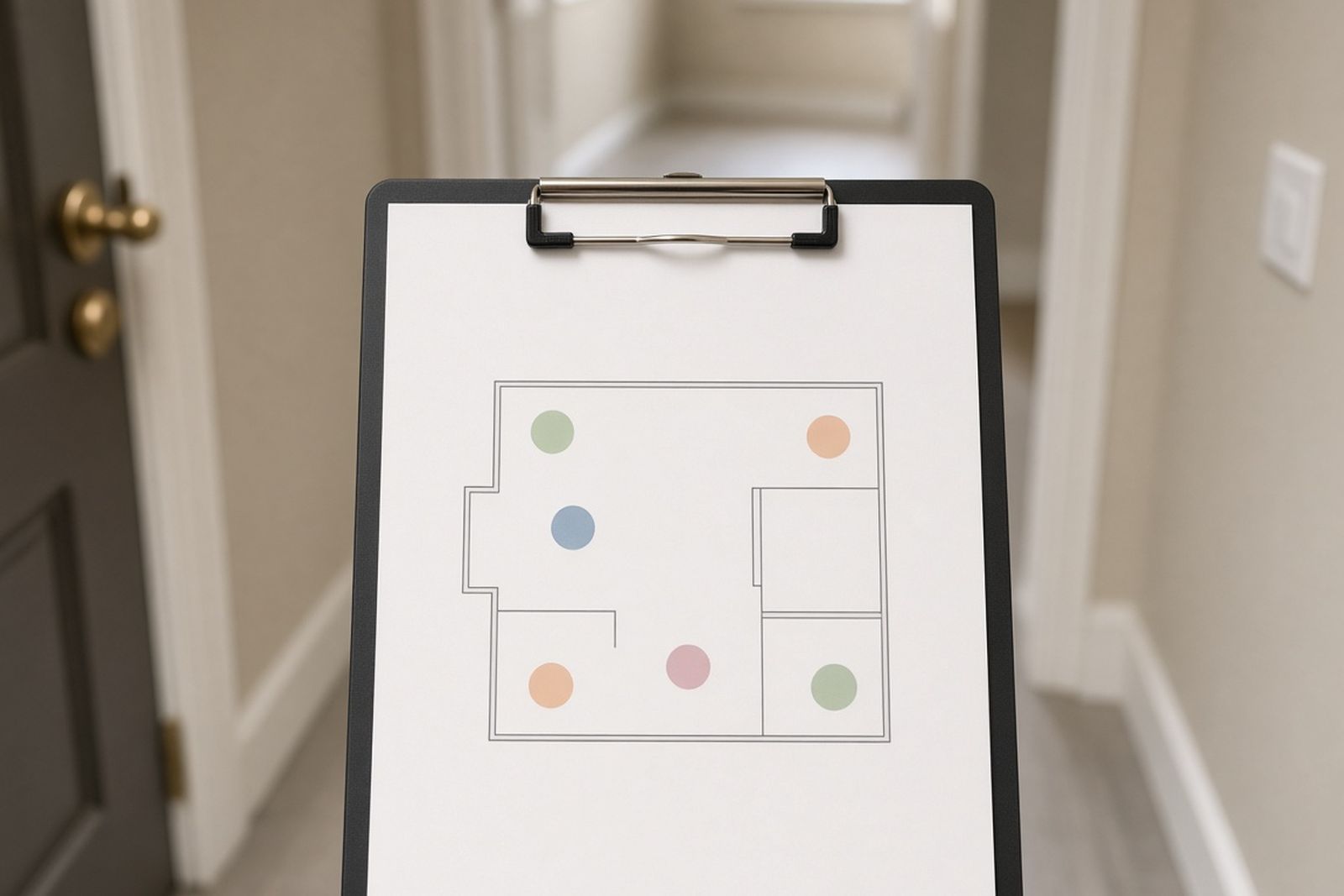
Clipboard showing a room plan with color-coded dots marking high-touch surfaces
Illustrative photo, not a job record. Clipboard showing a room plan with color-coded dots marking high-touch surfaces.
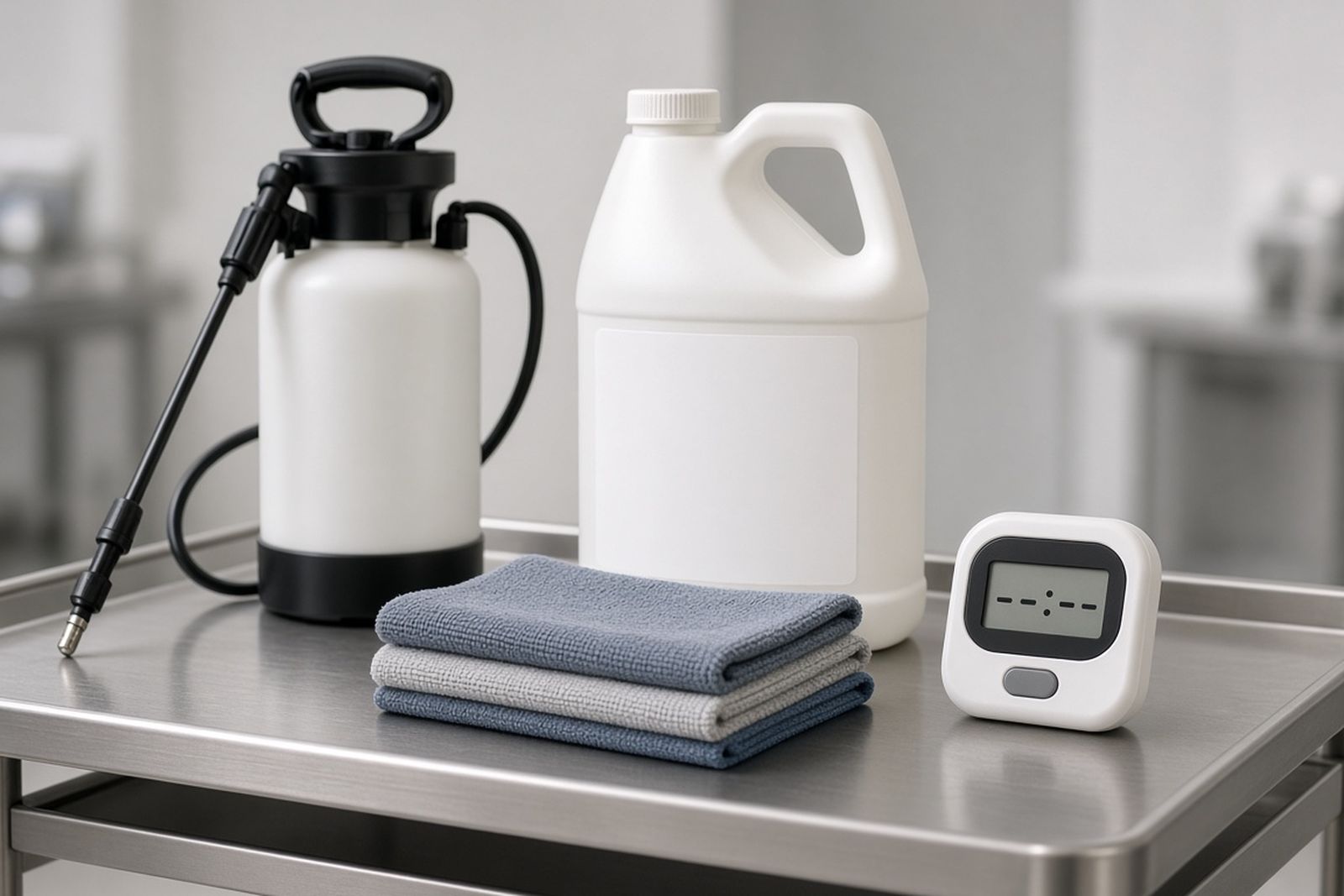
Pump sprayer, disinfectant jug, folded cloths and a contact-time timer on a steel cart
Illustrative photo, not a job record. Pump sprayer, disinfectant jug, folded cloths and a contact-time timer on a steel cart.

Infectious Disease Disinfection figures to keep in mind

National and research figures, not Palm Beach data. Local conditions, rules and providers vary; use these for scale and context only.

223,900

CDC's 2019 Antibiotic Resistance Threats Report estimated 223,900 C. difficile cases in hospitalized patients and 12,800 deaths in 2017, with $1 billion in attributable healthcare costs.

Read with care: Counts hospitalized cases only; costs cover hospital-onset cases only.

Source: CDC (2019)United States, hospitalized patients, 2017 data

323,700

CDC estimated 323,700 MRSA cases in hospitalized patients and 10,600 deaths in 2017, with $1.7 billion in attributable healthcare costs.

Read with care: Excludes many uncultured skin infections; hospitalized cases only.

Source: CDC (2019)United States, hospitalized patients, 2017 data

9.4-51 million

CDC estimates seasonal flu caused 9.4 million to 51 million illnesses, 120,000 to 710,000 hospitalizations and 6,300 to 52,000 deaths annually in the U.S. between 2010 and 2025.

Read with care: Ranges reflect large season-to-season variation and are modeled estimates.

Source: CDC (2025)United States, annual range across 2010-2025 seasons

These figures are public research and agency data, not this network's own job records. Keep each number with its population, year and limits; none of them predicts cost, timing or outcome at a specific property.

Plan before you reach out

Use the first 24 hours planner for immediate steps and the provider vetting checklist to confirm any Palm Beach provider's training, insurance and waste path in writing.

What research has found

Findings from published studies of people and properties in situations like this one. They describe what researchers observed in a specific group; they are not predictions for your case.

Transfer risk also differed between the bacterial strains.
Who was studied: Six commercial wipe products; two bacterial strains on nonporous Formica.Limits: Specific products and strains; no general maximum area or disease outcome established.Cross-contamination by disinfectant towelettes varies by product chemistry and strain (2020)
Tested wipes moved C. difficile spores onto previously clean areas.
Who was studied: Non-sporicidal-claim wipes tested on Formica with C. difficile spores.Limits: Not a comparison of all sporicidal products; physical removal is not complete inactivation.Disinfectant wipes transfer Clostridioides difficile spores during the disinfection proc… (2020)

Infectious Disease Disinfection community polls

Poll results

Every count is a real visitor vote; nothing is seeded or padded. One vote per poll per device, and you can change your answer.

Your experience

When your facility had an illness cluster, how did you handle cleaning?

No visitor votes yet
Process

How did you decide whether to close all or part of the facility?

No visitor votes yet

Planning cleanup in Palm Beach?

Send a short message about the property to the follow-up inbox. A coordinator can reply by email with next steps.

Your request is sent to the follow-up inbox. A coordinator can reply by email.

If anyone is hurt or in danger, call 911 first.