Short answer
Infectious disease disinfection works by chemically damaging a microbe's outer structures or internal machinery. Organisms differ widely in resistance: enveloped viruses such as flu are easier to inactivate, non-enveloped viruses such as norovirus are harder, and bacterial spores such as C. difficile are hardest. Success depends on cleaning first, choosing a registered product with the right label claim, and keeping surfaces wet for the full contact time.
What a disinfectant actually does to a germ
Disinfectants work by attacking parts of a microorganism it needs to survive or reproduce. Alcohols and quaternary ammonium compounds disrupt fatty membranes. Oxidizers such as hydrogen peroxide, chlorine, and peracetic acid damage proteins, lipids, and genetic material. Some products combine mechanisms to widen the range of organisms they affect.
The goal is not to make a surface sterile, which is a much higher bar used for surgical instruments. The goal is to reduce the number of live, infectious organisms on an environmental surface to a level that sharply lowers the chance of transmission.
Labs measure this as a log reduction. A 3-log reduction means roughly 99.9% of the tested organisms were inactivated under test conditions; each additional log adds another nine. Those numbers are specific to the organism, surface, soil load, and contact time used in testing, which is why a label claim is not a universal promise.
Concentration and temperature matter as well. A product diluted weaker than its label directs may fall below the strength it was tested at, while a cold surface can slow some chemical reactions. Premixed products remove dilution errors, but they still have shelf lives, and some, such as diluted bleach, lose strength within a day once mixed.
A hierarchy of resistance
Microbiologists often describe a rough hierarchy of resistance. Near the easy end are enveloped viruses, such as influenza and coronaviruses, which have a fragile fatty outer layer that many products break quickly. In the middle are vegetative bacteria, such as Staphylococcus and E. coli, and fungi. Harder still are non-enveloped viruses, such as norovirus, which lack that fatty layer and resist many common chemistries.
At the hard end sit bacterial spores. C. difficile, for example, forms a dormant spore with a tough protein coat that protects it from drying, heat, alcohol, and most quaternary ammonium products. Killing spores usually requires a sporicidal product, often chlorine-based or peracetic acid based, with a longer dwell time.
This hierarchy is why professionals ask what illness is involved before choosing a product. A disinfectant that performs well against influenza may have no claim against norovirus or spores at all.
How long do infectious organisms survive on surfaces?
Environmental persistence is one of the main reasons surface disinfection matters. Kramer and colleagues pulled together the published evidence in a 2006 systematic review in BMC Infectious Diseases. They reported that MRSA can persist on dry surfaces for 7 days to 7 months, while spores of C. difficile lasted 5 months, norovirus 8 hours to 7 days, and influenza 1 to 2 days.
Those ranges reflect different studies, surfaces, and conditions, so they describe possibilities rather than predictions for any particular room. Still, they show why a space can pose a risk long after a sick person has left it.
The infectious dose matters too. CDC stated in a 2011 fact sheet that as few as 18 norovirus particles are thought to be sufficient to cause infection. When a small number of particles can make someone ill, a surface that looks spotless can still spread disease if it was not properly treated.
Contact time, and why it is so often missed
Every EPA-registered disinfectant lists a contact time for each organism on its label. That is the length of time the surface must remain visibly wet for the product to deliver its tested kill. Depending on the product and organism, it can range from under a minute to ten minutes or more.
In everyday use, contact time is often ignored. Spraying and immediately wiping dry turns a disinfectant into little more than a cleaner.
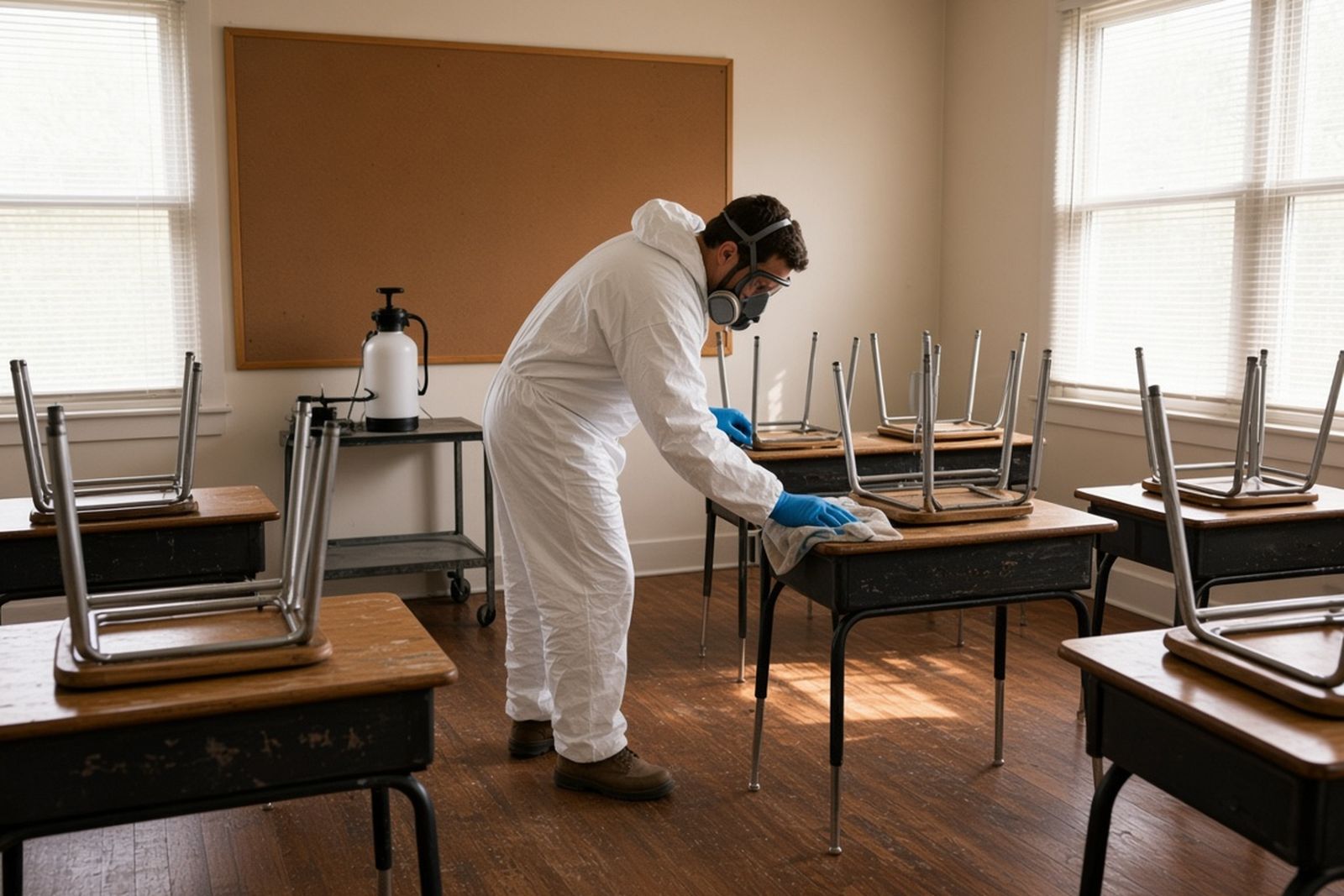
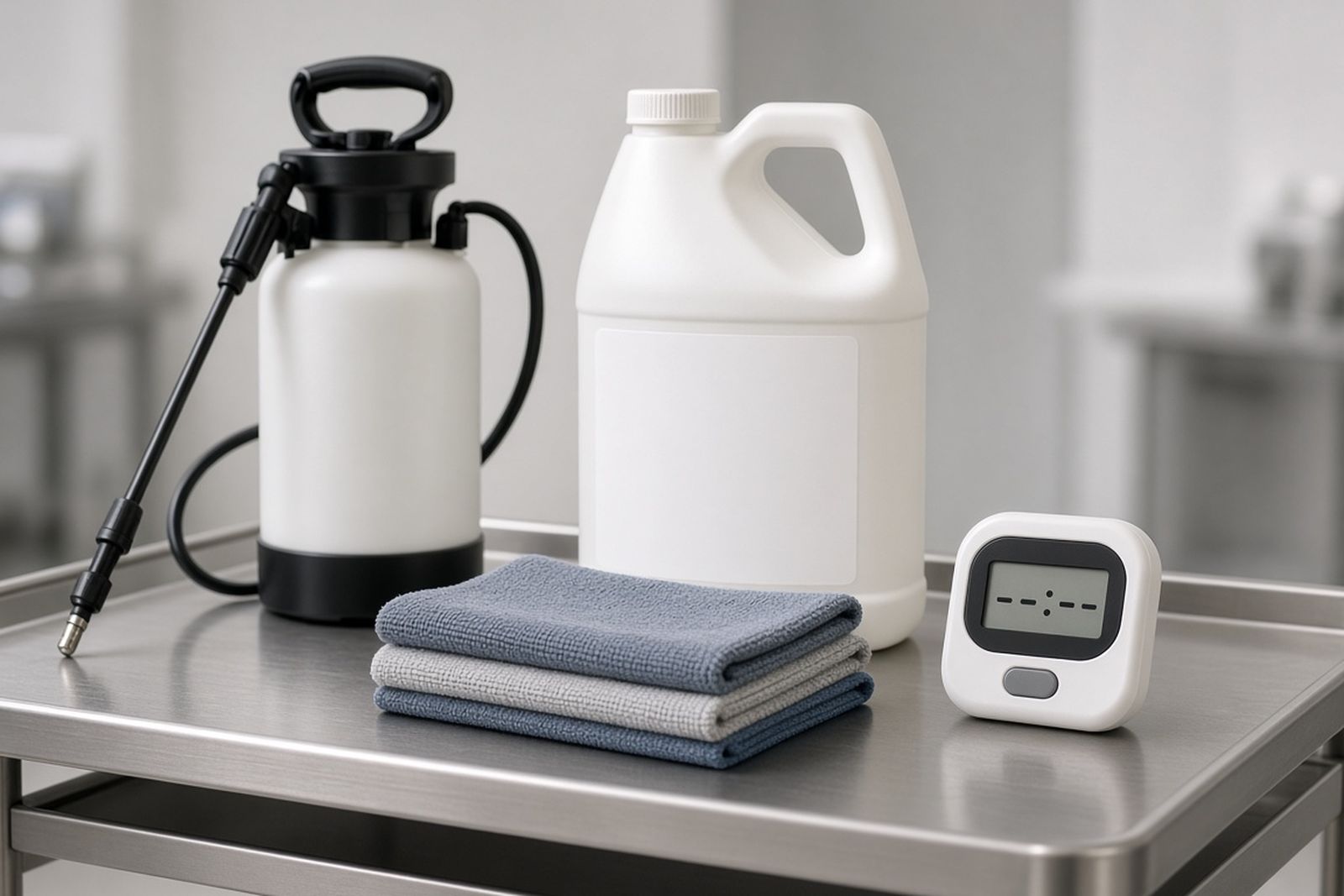
Evaporation is the practical enemy. Warm rooms, air movement, and small amounts of product can dry a surface before the time is up. Professionals address this by applying enough product to stay wet, reapplying as needed, and timing the dwell rather than estimating it.
Clean first, then disinfect
Organic matter, including body fluids, food residue, and ordinary grime, interferes with disinfection in two ways. It physically shields microbes from contact with the product, and it chemically consumes some active ingredients, particularly oxidizers such as chlorine.
Cleaning removes that load using detergent, water, and friction. Some products are labeled as one-step cleaner-disinfectants for lightly soiled surfaces, but heavily soiled areas generally need a separate cleaning pass first.
Biofilms add another layer. These are communities of microbes embedded in a protective matrix they produce themselves. Dry-surface biofilms can form on frequently touched hospital and household surfaces and tolerate disinfectants better than free-floating organisms. Friction during cleaning helps break them up so chemistry can reach what remains.
Do foggers, sprayers, and UV devices change the science?
Application technology changes how product reaches a surface, not how the product works. Electrostatic sprayers charge droplets so they wrap around objects and coat surfaces more evenly. Foggers disperse fine droplets through a room. UV-C devices use light to damage microbial genetic material on surfaces within their line of sight.
Each tool has a place, particularly for large spaces or complex equipment. Each also has limits. Sprayed or fogged products still need to be registered for that application method and still need to meet the label's wet contact time. UV-C cannot reach shadowed areas and does not remove soil.
There are also health tradeoffs. Fine droplets can be inhaled, and some disinfectants irritate the airways or trigger asthma symptoms. Rooms treated by fogging usually need to stay empty for a period stated on the product label, and electronics or fabrics may react poorly to repeated misting. Ask any provider to explain the re-entry interval and how they protect sensitive items before they begin.
None of these technologies replaces cleaning. They are best understood as a way to supplement manual work on surfaces that have already been cleaned, not as a shortcut around it.
Illustration: why a norovirus outbreak kept returning
The following illustration is a composite. A small assisted living community experiences a norovirus outbreak. Staff increase cleaning using the quaternary ammonium wipes they normally stock. Cases slow but do not stop, and new residents fall ill a week later.
When an outside provider reviews the situation, they find three issues. The wipes on hand have no norovirus claim on their label. Staff were wiping surfaces and moving on within seconds, well short of any listed contact time. Soft surfaces such as upholstered dining chairs and a shared recliner in the common room were never addressed.
The provider switches to a product with a norovirus claim, trains staff on dwell times, sets up a clean-to-dirty sequence for each room, and arranges laundering or replacement of soft items. Combined with the facility's isolation and hand hygiene measures and guidance from the local health department, the cycle of new cases is broken.
High-touch surfaces come first
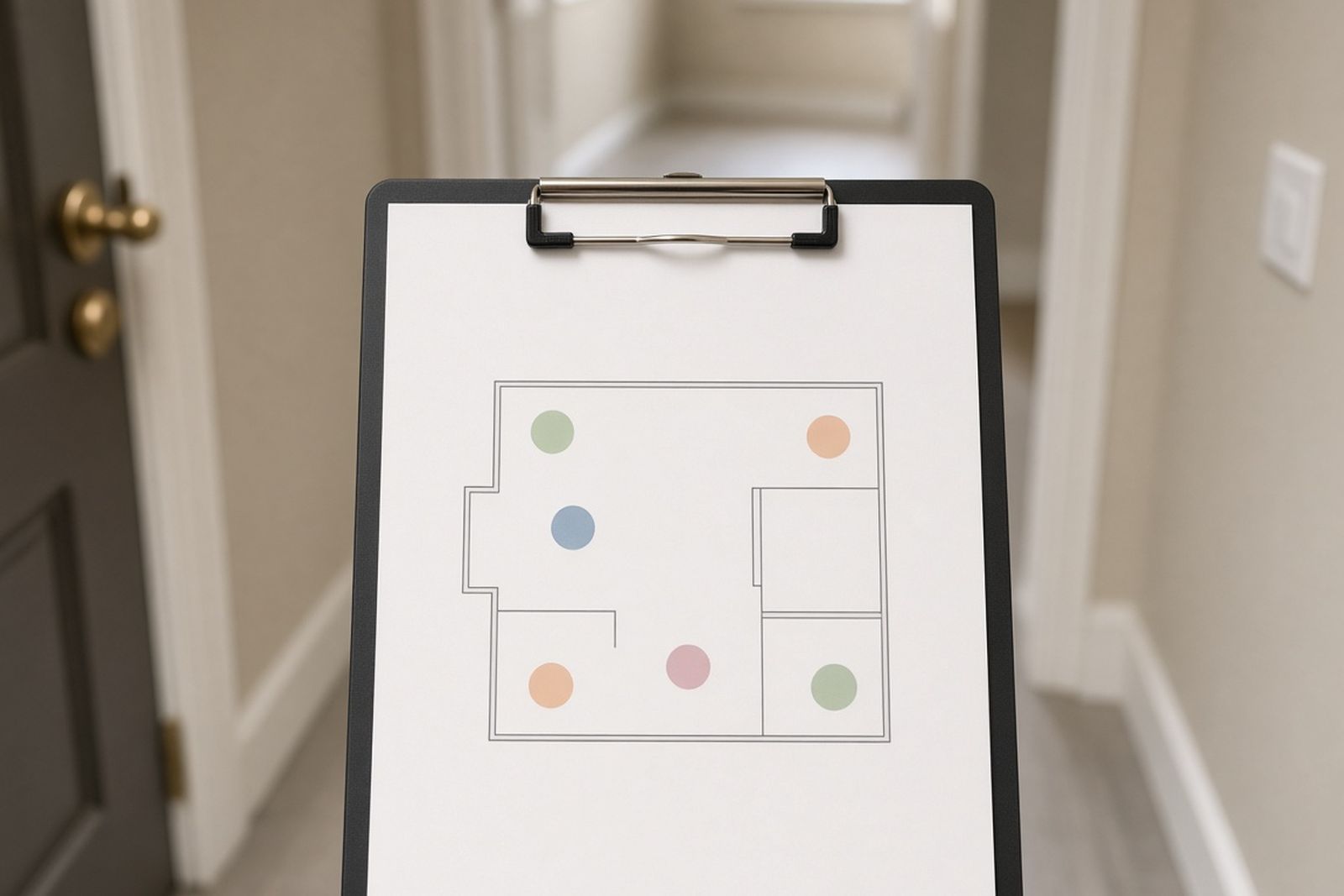
Not every surface carries the same risk. Frequently touched surfaces, often called high-touch points, spread organisms more readily than walls or ceilings. A focused plan starts there and works outward.
Airborne illnesses add another dimension. Diseases that spread mainly through the air, such as influenza and COVID, also leave droplets on nearby surfaces, but surface work alone will not address what is in the air. Ventilation, filtration, and time are part of the picture, and a good plan names them alongside wiping and spraying.
- Door handles, push plates, and light switches
- Bed rails, call buttons, and remote controls
- Toilet flush handles, faucets, and grab bars
- Tables, chair arms, and counters
- Keyboards, phones, tablets, and shared touchscreens
- Elevator buttons and handrails
- Soft surfaces that cannot be wiped, which may need laundering or replacement
Applying the science to your space
Start by identifying the organism of concern, or the most likely candidates, and choose a product with a matching EPA-registered claim. Clean before disinfecting. Measure contact time rather than guessing it. Focus on high-touch points first, and plan for fabrics and porous items separately.
Keep a record of what you used, where, and for how long. That habit helps you catch gaps, such as a room skipped during a busy shift, and gives public health staff useful information if cases continue.
If you manage a facility, coordinate with your infection preventionist or local public health staff, who may have specific guidance during an outbreak. For households, follow the label exactly and ventilate while you work.
Healthcare, childcare, food service, and residential care settings often have their own sanitation requirements, and your licensing agency or county health department can tell you what they are.