South · US

Infectious Disease Disinfection Planning in Atlanta, GA

Planning infectious disease disinfection in Atlanta, GA

Atlanta BeltLine-area disinfection planning. Covers porch-rail maps, MARTA-timed reopening, EPA claims, List N limits, and CDC hygiene steps. This is planning guidance, not a claim of a local office or crew in Atlanta.

Get an email reply about infectious disease disinfection

Send a short message to the follow-up inbox. A coordinator can reply by email. This form does not send emergency help; call 911 first if anyone is in danger.

Tell us what you need help with. Share a short description; please leave out medical details, access codes, and other sensitive information.

A request does not confirm a booking. For immediate danger, contact local emergency services.

Or email info@prompartybuses.com

Direct answer

The short answer for Atlanta, GA

BeltLine porches coated in trail dust, stacked Midtown kitchens, and duplex stairs timed to MARTA need Piedmont plans. Wash pollen film off before any product goes on. Keep List N inside its COVID-19 limits. Refuse sterile-unit certificates after a hallway wipe.

Editorial guide · Biohazard Remediation NetworkUpdated 2026-07-22Location focus: Atlanta, GA

Local planning context

Intown Piedmont blocks collect a different kind of grime than coastal Florida. Yellow pollen cakes onto shared porch rails. Trail grit rides in on BeltLine shoes. Duplex buzzers, basement laundry pull-chains, and stacked fridge handles all see heavy use. At its spring peak, Piedmont pollen leaves a visible film. Wash it off before any disinfectant claim is honest.

MARTA train times squeeze reopening choices. Someone late for the Red Line may rub a damp rail dry. That spoils the job. Georgia's summer humidity under sealed air conditioning traps smells differently than Intracoastal salt air. Futon covers, fabric chairs, and stuffed toys usually need washing or setting aside. Hard-surface germ claims don't carry over to them. Ordinary wipe-downs don't sterilize anything.

Midtown clinic suites sometimes share lobbies with apartments. If a BeltLine bike or scooter injury leaves blood in a duplex hallway, workers need an OSHA bloodborne pathogen plan. Side stairs on kudzu-covered lots often hide a second buzzer path the formal front porch never sees.

Property considerations

Wash pollen and trail grit off porch rails and buzzers before any disinfectant.

Wash or bag futon covers, porch cushions, and stuffed toys before any disinfectant goes on nearby surfaces.

On MARTA mornings, the treated bath stays shut until its clock runs out.

Duplex kitchen counters may need rinsing, unlike porch rails.

Don't let train-timed departures rub wet surfaces dry on shared stairs.

Keep clinic instrument rules out of notices about reopening residential stairs.

Response-planning framework

Sketch the path from BeltLine shoes to the kitchen

Gut bug or cough? Put no names on the stair. List N speaks to COVID-19. A stomach bug shared across a duplex may need a product with a different label claim. Ban sterile-home slogans on Piedmont walk-ups.

Wash off caked pollen before any product

CDC community guidance wants yellow pollen and bath grime gone first. Film left on porch rails keeps the product from working as labeled. Keep buzzers and taps wet for the printed time.

An empty period timed to the trains

One schedule shared with neighbors beats wiping panels dry to make a MARTA train. Was the spare bath treated? If not, it won't help. Run the system on outdoor air if the equipment allows, without calling the air sterile.

A Fulton County duplex landlord binder

File registration numbers, stair sketches, pollen-cleaning notes, and wet-time logs. A fridge-pull swab reads film, not germs. Send questions to the Fulton County Board of Health or the Georgia Department of Public Health. Medical advice stays with doctors.

Documentation checklist

  1. 1Sketch of porch-rail and buzzer traffic
  2. 2Note on the BeltLine-weekend exposure, without names
  3. 3EPA registration numbers and the germ claims used
  4. 4Proof that pollen film was removed
  5. 5Wet-period start and stop times for shared baths
  6. 6Reopening schedule for neighbors, tied to MARTA train times
  7. 7Decisions to wash or bag futon covers and stuffed toys
  8. 8Note that the lobby clinic was left out of the residential stair work

Official resources

Questions for this location

After a BeltLine weekend stomach cluster, what should a duplex treat first?

Start with the bath used during the illness, the fridge pulls on that path, and the pollen-coated porch rails where trail bags land. Wash off visible grime. Use a registered product meant for gut germs next. It sits wet until the timer ends. Stuffed toys go to the laundry or get set aside. Intown duplexes shouldn't assume a COVID-19 List N product works on norovirus unless its label supports that. Handwashing still matters around pollen-coated porch rails.
Our tutor comes at 3. Is that too soon after cleaning at noon?

It may be fine, if the label's wet time and return period both end before 3 and the surfaces were cleaned first. Check the label instead of guessing. Don't have the tutor and child sit at a table that's still wet. If timing is tight, hold the session in a room you didn't treat. Use plain words like cleaned and disinfected when you explain it.

What should stair neighbors hear while waiting on a MARTA reopen clock?

Tell them which shared stairs, porch, or laundry spaces are closed and when they reopen, so they can plan around their MARTA commute. Cleaning the stoop and washer cuts risk there. It won't stop someone from getting sick later. Leave out who was sick. Health questions can go to a doctor or the Fulton County Board of Health.

After a COVID-19 case at home, is a List N spray all our intown kitchen needs?

A List N product is listed by EPA for the COVID-19 virus when the label is followed. So it's a reasonable choice after a COVID-19 case. Check the EPA number. Follow the contact time and surface directions for the counters and hardware in a Piedmont kitchen. List N doesn't extend to stomach bugs that might follow a crowded intown weekend.

What if there was blood from an injury in the duplex?

Say a bike, scooter, or kitchen injury left blood on a duplex floor, stair, or counter. Tell the crew what they'll find, so they arrive with protection and follow OSHA's bloodborne pathogen standard. A wipe-down after a cold or stomach bug, with no blood involved, stays simple. Clean with detergent, then use a labeled product.

How should an Atlanta duplex owner handle spring pollen when disinfecting porch surfaces?

Pollen and dust sit on porch rails and furniture and can keep disinfectant from reaching the surface. Hose or wipe them down with soapy water first and let them dry. Then apply a disinfectant labeled for outdoor use. Keep the surface wet for the full contact time, which can be harder on warm, breezy days. Wash cushion covers instead of spraying them. Expect to wipe again soon, since pollen comes back fast in spring.

What should an intown Atlanta renter do if a neighbor across the duplex wall is sick?

You don't need to disinfect your own unit because a neighbor is sick, unless you share rooms or surfaces. Focus on the shared entry, mailbox, and laundry. Agree with your neighbor on who wipes what. Wash hands after touching shared items. Offer help if you can, like leaving groceries at their door. If the illness seems serious, encourage them to see a doctor rather than trying to diagnose it yourselves.

Contact

Get help by email

Send a short message for an email reply about infectious disease disinfection planning questions for the Atlanta area.

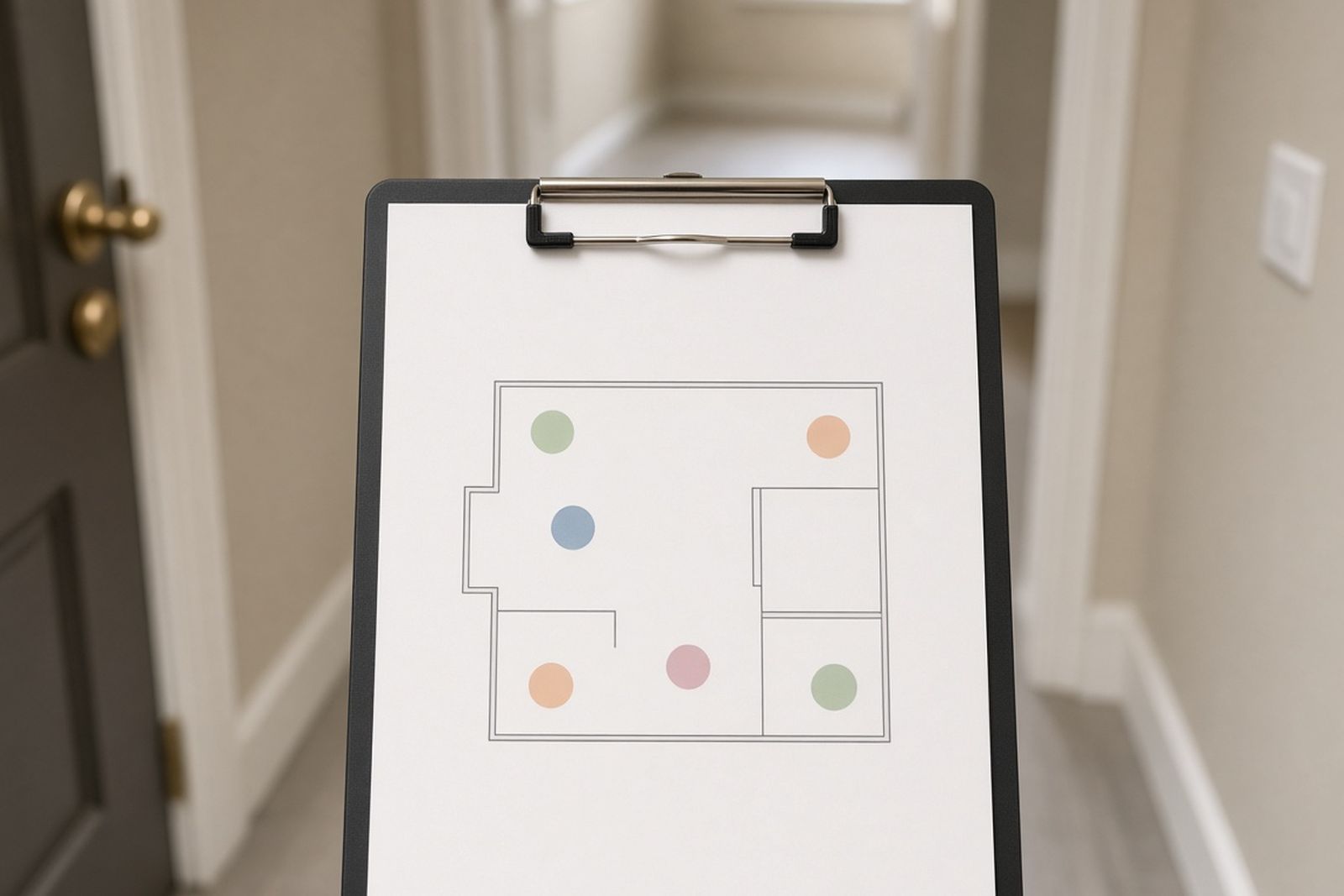
Clipboard showing a room plan with color-coded dots marking high-touch surfaces
Illustrative photo, not a job record. Clipboard showing a room plan with color-coded dots marking high-touch surfaces.
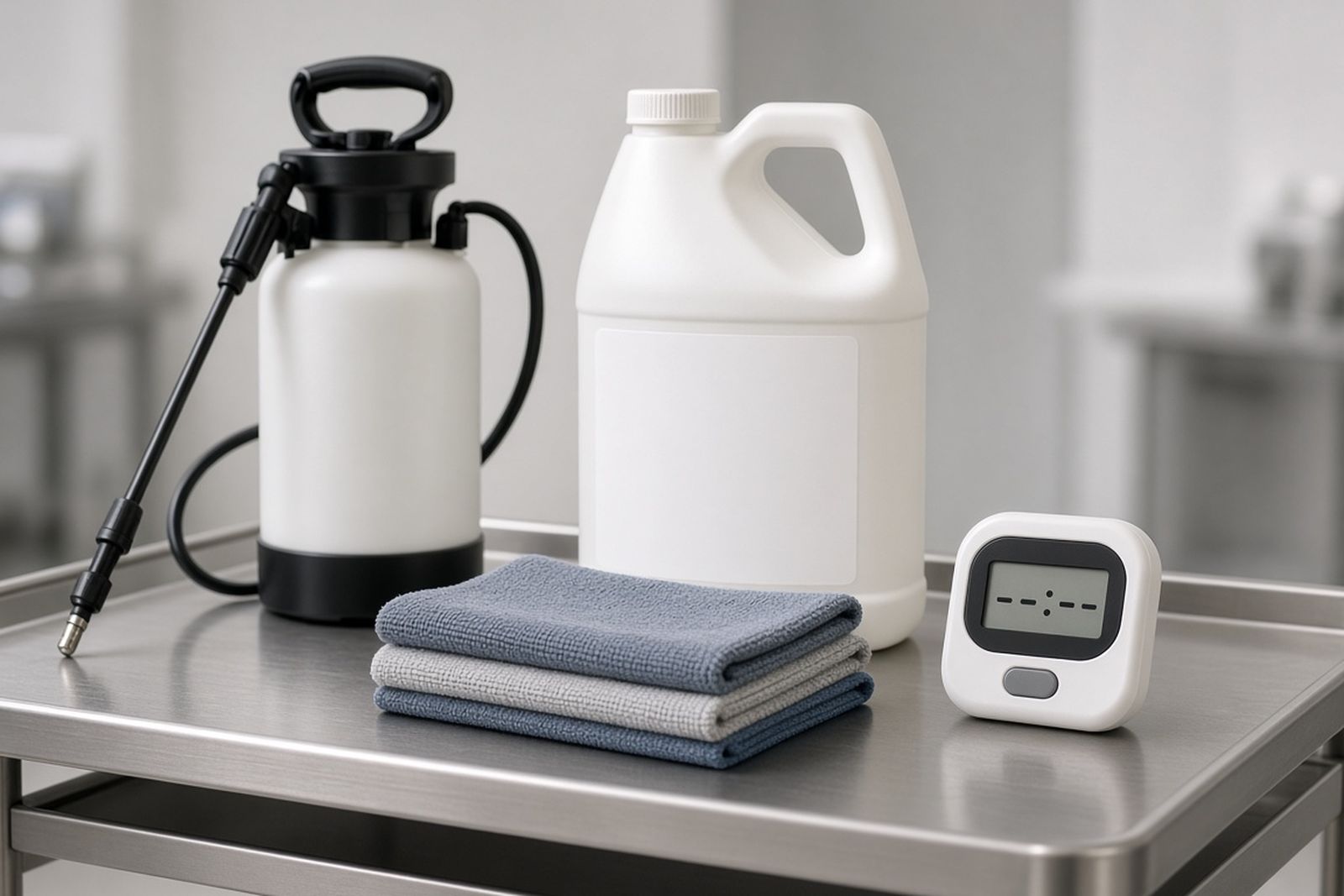
Pump sprayer, disinfectant jug, folded cloths and a contact-time timer on a steel cart
Illustrative photo, not a job record. Pump sprayer, disinfectant jug, folded cloths and a contact-time timer on a steel cart.

Infectious Disease Disinfection figures to keep in mind

National and research figures, not Atlanta data. Local conditions, rules and providers vary; use these for scale and context only.

223,900

CDC's 2019 Antibiotic Resistance Threats Report estimated 223,900 C. difficile cases in hospitalized patients and 12,800 deaths in 2017, with $1 billion in attributable healthcare costs.

Read with care: Counts hospitalized cases only; costs cover hospital-onset cases only.

Source: CDC (2019)United States, hospitalized patients, 2017 data

9.4-51 million

CDC estimates seasonal flu caused 9.4 million to 51 million illnesses, 120,000 to 710,000 hospitalizations and 6,300 to 52,000 deaths annually in the U.S. between 2010 and 2025.

Read with care: Ranges reflect large season-to-season variation and are modeled estimates.

Source: CDC (2025)United States, annual range across 2010-2025 seasons

323,700

CDC estimated 323,700 MRSA cases in hospitalized patients and 10,600 deaths in 2017, with $1.7 billion in attributable healthcare costs.

Read with care: Excludes many uncultured skin infections; hospitalized cases only.

Source: CDC (2019)United States, hospitalized patients, 2017 data

These figures are public research and agency data, not this network's own job records. Keep each number with its population, year and limits; none of them predicts cost, timing or outcome at a specific property.

Plan before you reach out

Use the first 24 hours planner for immediate steps and the provider vetting checklist to confirm any Atlanta provider's training, insurance and waste path in writing.

What research has found

Findings from published studies of people and properties in situations like this one. They describe what researchers observed in a specific group; they are not predictions for your case.

Used wipes retained spores during and after wiping.
Who was studied: Non-sporicidal-claim wipes tested on Formica with C. difficile spores.Limits: Not a comparison of all sporicidal products; physical removal is not complete inactivation.Disinfectant wipes transfer Clostridioides difficile spores during the disinfection proc… (2020)
Bleach and quaternary-ammonium products were the most frequently reported disinfectants.
Who was studied: 47 US hospital environmental-services respondents across 26 states; 2019 survey.Limits: 47 of 273 contacted participated; practices were reported rather than observed.Environmental cleaning and disinfection of hospital rooms: A nationwide survey (2021)

Infectious Disease Disinfection community polls

Poll results

Every count is a real visitor vote; nothing is seeded or padded. One vote per poll per device, and you can change your answer.

Your experience

When your facility had an illness cluster, how did you handle cleaning?

No visitor votes yet
Process

How did you decide whether to close all or part of the facility?

No visitor votes yet

Planning cleanup in Atlanta?

Send a short message about the property to the follow-up inbox. A coordinator can reply by email with next steps.

Your request is sent to the follow-up inbox. A coordinator can reply by email.

If anyone is hurt or in danger, call 911 first.